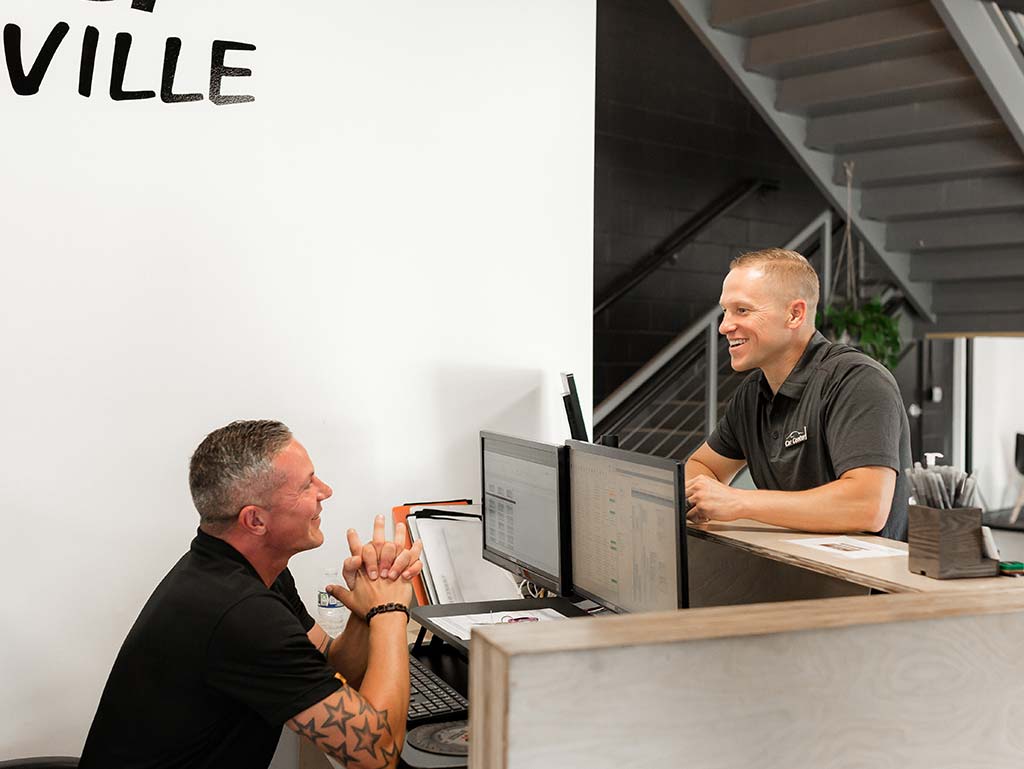
Seeing the whole picture starts with listening to every perspective
This month at Car Center, we’re in the middle of our stay interviews.
Not exit interviews. Not performance reviews. Not corrective conversations.
Stay interviews.
There’s a simple truth in business: where you stand is what you see.
Leadership sees one perspective. Estimators see another. Technicians experience something different. Customer service representatives see things others don’t.
If you only evaluate your company through the leadership lens, you’re only seeing part of the story. Stay interviews create space to hear from every angle, before frustration turns into burnout and before small friction turns into turnover. It’s proactive, not reactive. And that’s the difference.
Why Not Just Wait for Exit Interviews?
Most companies find out what’s broken after someone leaves. By then, it’s too late to fix the experience for that person. Stay interviews flip that.
Here are some of the questions Car Center has asked:
What has a good day looked like for you lately? What made it good?
What part(s) of your job have been frustrating?
Who do you turn to when you are frustrated, and why?
When was the last time you thought about leaving?
What pushed you to that point?
What is something seemingly small that we, as a company, could change or do that would make a big difference for you?
What has kept you with the company?
Those answers reveal patterns. And patterns reveal blind spots. Most dysfunction doesn’t start with one massive failure. It starts small.
Breakdowns that feel manageable on their own but become overwhelming over time. When those things go unspoken, they compound. When they’re surfaced, they can be addressed. Stay interviews aren’t about proving we’re a great company. They’re about making sure we’re becoming one.
Not Just Saying Who We Are—Becoming It
It’s easy for a business to define its values on paper. It’s harder to measure whether those values are actually being experienced. Stay interviews help us evaluate whether those words show up in the day-to-day reality of our team. If there’s a gap between what we say and what people experience, we want to know. Because we’re not interested in image. We’re interested in ownership. And ownership requires listening.
If you’re a customer, you’ll never sit in on a stay interview. But you’ll feel the impact.
Aligned teams communicate better. Clear communication creates smoother processes. Smoother processes create better repair experiences.
How to Run a Simple Stay Interview in Your Business
If you’re a business owner or leader reading this, here’s a simple framework you can use:
1. Schedule intentional one-on-one time. This should feel separate from performance reviews and, preferably, not be conducted by the employee’s direct manager to encourage more honest feedback. 2. Ask intentional questions. The best questions don’t produce one-word answers—they reveal experiences, frustrations, and opportunities. 3. Listen more than you talk. Resist the urge to defend or explain. 4. Look for patterns, not isolated complaints. Track the patterns. Fix the patterns. 5. Follow up. Take those patterns and report them to your leaders. Keep people accountable, and set check-in reminders to make sure the improvements stay alive.
Stay interviews are simple. But when done consistently, they create something every organization needs: clarity before problems become burnout.